


Parashat Naso
29th May 2026
Week of 22 – 30 May 2026
Torah Portion : Numbers 4 :21 – 7 :89 Haftarah : Judges 13 :2 – 25
Theme: Birkat Kohanim — The Priestly Blessing (6:22-27)
Parashat Naso happens to be the longest parashah in the Torah. Most of its first half deals with circumstances when one’s place in the community is in question because of unusual behavior. The second half deals with the offerings brought by each tribe as the sanctuary’s dedication concludes. Chapters 5 and 6 consist of several laws inserted into the account of the preparations for the march through the wilderness. They deal with the prevention and elimination of impurity in the camp of the Israelites. These laws have in common the figure of the priest, who plays a prominent role in each case. However, returning to some of the familiar Torah readings year after year can be likened to revisiting a close friend. And it would be true to say that The Priestly Blessing [6:22 – 27] is one such reading.
The Torah instructs the Kohen to bless the people, and prescribes the words of the blessing. In Hebrew, it consists of fifteen words, divided into three short verses of three, five, and seven words respectively. The Targum, the ancient Aramaic translation of the Torah, provides an authoritative insight into the meaning of these three verses. The first is intended to be a blessing for success in one’s work and for protection in dangerous situations. The second verse is a request for enlightenment through study of Torah. The third verse is a plea that God, listens to the people when we turn to God in prayer; it concludes with a prayer for peace in every area of life.
Lest there be the impression that the blessing is derived from the status, power, or merit of the kohen, or that the kohen is the source of blessing, the Torah follows immediately with: “Thus shall they put My name upon the children of Israel, and I will bless them.” God alone is the source of blessing. The kohanim are merely instruments through whom the blessing is conveyed to the people. The kohanim say the words of the blessing: only God bestows it.
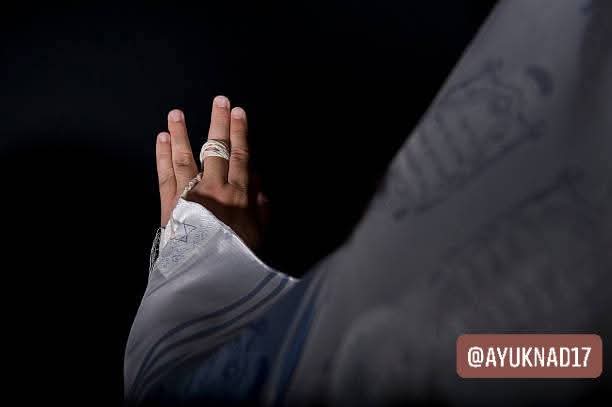
The ritual of the Priestly Blessing [“Birkat Kohanim”], was an integral part of the ancient Temple service. It took place every day, immediately following the daily morning offering. But the blessing did not stay confined to the Temple. It became part of communal prayer assemblies even before there was a synagogue, and then was incorporated into the ritual of the synagogue. During the period of the First Temple, the rite of the Priestly Blessing was performed throughout the country.
It is interesting to note that some years ago this blessing, written in Hebrew, was discovered in 2700-year-old burial caves in the Hinnon Valley in Jerusalem. It is the oldest record of written words from the Bible text – The Priestly Blessing.
For Reflection and Discussion: [1] Think about blessings…giving them and receiving them. Do you bless others? What reaction do you have to being blessed by someone? [Consider the Shabbat meal practice of the parents placing their hands individually on each one of the children, and reciting a blessing]. In what ways have you been a blessing to others? How do you let your face shine on another? [2] Do we actually see ourselves as being a blessing to others? How are those we live with a blessing to us?
This week’s Parasha commentary was prepared by
Roy da Silva, MTh [Biblical Theology],
Chandigarh, India. Bat Kol alumnus, 2002 – 2006, 2015
[Copyright © 2026]
Comments are closed