


The Solemnity of the Corpus Christi
07th June 2026
Lectionary Readings: Deut. 8:2-3, 14b-16a; Ps. 147:12-13, 14-15, 19-20;
1 Cor. 10:16-17; Jn. 6:51-58
Theme: “Abiding Presence: Sustained by the True Bread for Eternal Life.” (John 6:51-58)
Sending you warm blessings on this special feast day! May the Body and Blood of Christ (Corpus Christi) fill you with faith, heal your heart, and guide you on your daily journey. Today, we come together to celebrate the incredible gift of divine love: Jesus Christ, truly present in the Holy Eucharist, offering Himself as the Living Bread to nourish our souls and give us eternal life. Let’s cherish the abiding presence that sustains us with the True Bread for Eternal Life (cf. John 6:51-58).
The Solemnity of the Most Holy Body and Blood of Christ, affectionately known as Corpus Christi, is a wonderful Christian feast that honors the real presence of Jesus in the Eucharist. The Latin name “Corpus Christi” means “Body of Christ,” and it’s celebrated on the Thursday after Trinity Sunday or the following Sunday. This feast shines a special light on the Eucharist, which we also celebrate on Holy Thursday during a more somber week. All around the world, Catholics take part in joyful public processions, carrying the sacred host through the streets.
Let’s not forget the inspiring origins of this feast! It all began with a miracle in 1263 in Bolsena, Italy, where a host unexpectedly bled onto an altar cloth, sparking the idea for this special celebration. Pope Urban IV officially established this universal feast day in 1264, a true blessing for all of us.
In many lovely places, like Poland, Spain, and Italy, towns create beautiful and intricate street carpets made entirely of flower petals for the procession to walk over. One of the most touching stories behind this Solemnity is about St. Juliana of Cornillon, a devoted Belgian nun who spent 40 years praying for this feast after seeing a vision of a full moon with a dark spot, symbolizing a missing church holiday.
The feast day of Corpus Christi is a special celebration in the Catholic Church that honors the Real Presence of Jesus Christ in the Eucharist. While it was officially established in the 13th century by Pope Urban IV, the roots of the feast go way back to the teachings of the Early Church Fathers, who passionately believed in the miraculous transformation of bread and wine into Christ’s body and blood.
These Theological Foundations from the Church Fathers, that the creation of Corpus Christi didn’t bring about a new belief; instead, it highlighted an age-old tradition passed down from the apostles. St. Ignatius of Antioch, one of the earliest Church Fathers from around 110 AD, referred to the Eucharist as “the flesh of our Savior Jesus Christ.” He challenged early heretics known as Docetists, who avoided the sacrament because they didn’t believe it was truly Christ’s flesh. St. Justin Martyr, writing around 150 AD, also emphasized this point in his well-known First Apology, stating that the consecrated bread and wine are “not common bread and common drink,” but the real flesh and blood of Jesus. Lastly, let’s not forget the contributions of St. Thomas Aquinas: The Pope asked this brilliant Dominican theologian to write the prayers and hymns for the feast. Aquinas drew inspiration from the rich theological traditions of his time to compose beautiful hymns like “Pange Lingua” and “Panis Angelicus,” which continue to be cherished to today.
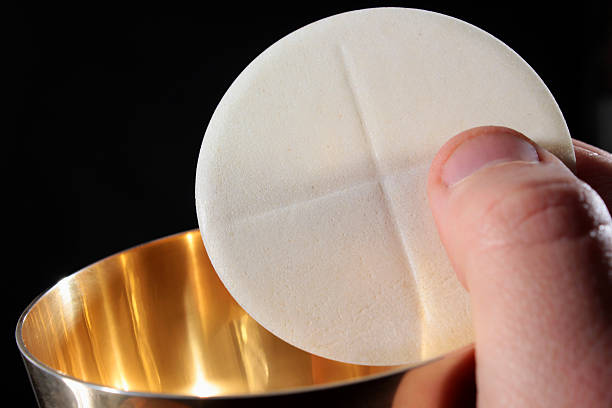
Today’s celebration is all about the beautiful themes found in cf. Deuteronomy 8, which include divine sustenance, remembrance, and moving from physical hunger to spiritual nourishment. We still recall the Manna as a Prefigurement, In Deuteronomy, we learn about manna, the miraculous bread that was provided for the Israelites in the desert. In Catholic teachings, this physical bread is seen as a preview of the Eucharist, which is referred to as the true “Bread from Heaven” that gives us eternal life. So, we are invited to have a Humility and Dependence: we can see that God let the Israelites experience hunger to help them learn to depend totally on Him. Similarly, Corpus Christi is a time to celebrate our reliance on Christ’s sacrifice and recognize our spiritual need for the Eucharist.
So, we know that the Danger of Forgetting, ibid. Deuteronomy 8 also reminds us not to forget God, especially when times are good. Corpus Christi helps us keep that idea in mind with the reminder, “Do this in memory of me,” helping us avoid spiritual amnesia. A Word and Sacrament, the passage tells us that “man does not live by bread alone, but by every word that comes from the mouth of the Lord.” Jesus is the embodiment of this Word, offering His own flesh as the ultimate nourishment for our souls. We learned that the Desert Journey, the challenging journey through the wilderness really reflects our life journey as a Church. The Eucharist is our modern “viaticum” the food we need for the journey through the sometimes-difficult desert of life.
We’re excited to celebrate the feast day that honors the Real Presence of Jesus Christ in the Eucharist. In the Roman Catholic Liturgy (specifically Year A), we have cf. Psalm 147:12-13, 14-15, and 19-20 as our Responsorial Psalm. This choice is perfect because the themes in the Psalm beautifully reflect the mysteries of the Eucharist. One major connection we see is in the idea of the “Finest Wheat” (v. 14-15): “He has granted peace in your borders; with the best of wheat, he fills you.” Historically, this refers to God providing not only material nourishment and manna to the people of Israel but also, in the context of Corpus Christi, highlights how the “best of wheat” ultimately points to the Bread of Life the consecrated Host. Instead of just filling us with earthly grain, God gives us the spiritual food of Christ’s own Body. Another wonderful theme in the Psalm is “The Word Made Flesh” (v. 15, 19-20): “He sends forth his command to the earth; swiftly runs his word! He has proclaimed his word to Jacob…” Here, the Psalm celebrates how God reveals His special Word, statutes, and ordinances to His chosen people. This ties in beautifully with our Mass, where we transition from the Liturgy of the Word to the Liturgy of the Eucharist. The ultimate “Word” that came to us is Jesus Christ, the Word Made Flesh, and in the Eucharist, we get to experience this Word in a very real and tangible way. Lastly, the Psalm talks about protection, blessing, and peace (v. 12-14): “Glorify the Lord, O Jerusalem… For he has strengthened the bars of your gates; he has blessed your children within you. He has granted peace in your borders…” It invites us all to joyfully worship God for His protection and peace. For us as Christians, the greatest source of peace and unity comes from Holy Communion. Sharing in the same bread connects us as “One Body,” bringing us true spiritual peace and helping us stand strong against sin.
Another point that I would like to share is from our 2nd reading for our liturgical feast. In the liturgical calendar, cf. 1 Corinthians 10:16-17 is frequently selected as the second reading for this feast day because it directly highlights the vertical and horizontal dimensions of Holy Communion as the vertical connection that Participation in Christ brings: “The cup of blessing that we bless, is it not a participation in the blood of Christ? The bread that we break, is it not a participation in the body of Christ?” (v. 16) This verse affirms that receiving the Eucharist is not merely a symbolic act or metaphor. It is a literal entry into the once and for all sacrifice of Jesus. The Greek word used for participation (koinonia) signifies an intimate, transformative communion with the actual divine life of Christ. Another view is Horizontal Connection, is that the Unity of the Church, “Because the loaf of bread is one, we, though many, are one body, for we all partake of the one loaf.” (v. 17) This verses bridge Christ’s physical body in the sacrament to His mystical body, the Church. Eating from the same altar transforms a diverse group of believers into a unified, communal family. The shared meal demands that individualistic faith be replaced by mutual love, service, and reconciliation.
I’d love to share some thoughts from our second reading, which is all about our special feast celebrating today. One of the key passages we often hear on this feast day is cf. 1 Corinthians 10:16-17. It beautifully captures both the upward and outward connections we experience in Holy Communion. First, let’s look at the vertical connection. The passage says, “The cup of blessing that we bless, is it not a participation in the blood of Christ? The bread that we break, is it not a participation in the body of Christ?” (v. 16). This really emphasizes that receiving the Eucharist isn’t just a symbol; it’s about entering into the profound sacrifice of Jesus. The Greek word for participation “koinonia” means we are invited into a deep, transformative relationship with Christ’s divine life. Now, let’s not forget the horizontal connection, which speaks to the unity of the Church. The next verse tells us, “Because the loaf of bread is one, we, though many, are one body, for we all partake of the one loaf” (v. 17). This connects Christ’s physical presence in the Eucharist to the mysterious body of the Church. When we share the same bread, we come together as one community, no matter our differences. This meal calls us to move away from individualistic faith and embrace mutual love, service, and reconciliation. Isn’t that a beautiful reminder of our shared journey.
The Real Presence of Jesus Christ His body, blood, soul, and divinity in the Eucharist forms the theological foundation for this celebration. This is directly drawn from Jesus’ Bread of Life Discourse found in ibid. John 6:51-58. The concept of the Real Presence versus symbolism is clear in John 6:55, where Jesus explicitly states, “My flesh is true food, and my blood is true drink.” The Feast of Corpus Christi celebrates the doctrine of transubstantiation, affirming that the Eucharistic bread and wine are transformed into the actual substance of Christ, rather than being mere symbols. Consequently, this Eucharist is regarded as a Gift of Eternal Life. Jesus promises that those who partake in Him will “live forever” and be raised on the last day, as referenced in ibid. John 6:54 and 6:58. This feast honors the Eucharist as essential spiritual nourishment necessary to sustain eternal, divine life within the believer. Another significant aspect is the Divine Mutual Indwelling, highlighted in ibid. John 6:56, which emphasizes mystical intimacy: “Whoever eats my flesh and drinks my blood remains in me, and I in him.” This liturgical celebration underscores “Holy Communion,” which unites the faithful into one communal body with Christ. Moreover, we can observe the New Covenant Sacrifice in the Eucharist. Jesus contrasts this with the Old Testament manna, which could not prevent physical death (ibid. John 6:58). Corpus Christi celebrates the fulfillment of God’s covenantal promise through Jesus, who offers His own “flesh for the life of the world” (cf. John 6:51). A major Catholic liturgical feast that celebrates the Real Presence of Jesus Christ in the Holy Eucharist His Body, Blood, Soul, and Divinity. According to the Catechism of the Catholic Church (CCC), this feast honors the Eucharist as the absolute “source and summit of the Christian life” (CCC 1324) and the “sum and summary of our faith” (CCC 1327). The Dogma of Transubstantiation, as the definition, of the Catechism affirms that through the consecration of the bread and wine, a change of the whole substance happens (CCC 1376). The Reality, that the bread and wine become the literal Body and Blood of Christ. The Senses, that only the physical appearances (species) of bread and wine remain. This Sacrificial and Memorial Nature, are the true and holy sacrifice, Every Mass makes present Christ’s unique sacrifice on Calvary (CCC 1366).
While Holy Thursday recalls the institution of the Eucharist, Corpus Christi focuses purely on joyful celebration and public adoration. We can see the Communal and Missionary Dimension, this Communion, is Partaking in the sacrament unites the faithful into one single mystical body (CCC 1396). and the Procession, that base on cultural practices in different Parishes traditionally hold Eucharistic Processions, carrying the Blessed Sacrament into the streets. We can see clearly that the Mission, through the public act symbolizes bringing Christ directly into the modern world. These Historical Foundations that are Roots and Established in 1264 by Pope Urban IV, following the mystical visions of St. Juliana of Liège. With the beautiful Hymns followed, the Pope commissioned Saint Thomas Aquinas to write the official liturgical prayers and hymns, such as the Pange Lingua and Tantum Ergo. So, let’s celebrate this day with joy and gratitude for the gift of the Eucharist, and together with all Catholic Christians all over the World, these figures help us appreciate the deep spiritual significance behind Corpus Christi and its celebration. Happy Feast! Mabuhay!
For Reflection and Discussion:
1. When you receive Holy Communion on this Solemnity of Corpus Christi, are you consuming the Bread of Life simply to sustain your personal spiritual routine, or are you allowing the Real Presence of Jesus to truly “Christify” your soul completely transforming how you love, forgive, and offer yourself to a hungry world?
2. Unlike the ancestral manna that only satisfied physical hunger temporarily, the Holy Eucharist offers eternal life. Ask yourself what temporary “security blankets” such as control, wealth, or status you rely on instead of drawing your primary daily strength from Christ.
Bibliography: ETZ HAYIM, Torah and Commentary: The Rabbinical Assembly, The United Synagogue of Conservative Judaism, 1999; The Catholic Study Bible 3rd Edition; The New American Bible, Saint Joseph Edition/R. Letham;Liddell & Scott’s: Greek-English Lexicon 1889; Cathechism of the Catholic Church, United States of America copyright 1994, United States Catholic Conference, Inc. Libreria Editrice Vaticana; HubertusR.Drobner”THEFATHERSOFTHECHURCH”;www.newadvent.org/fathers/;www.vatican.va/content/pius-xii/en/encyclicals/documents/hf\_p-xii\_enc\_29061943\_mystici-corporis-christi.html; www.vatican.va/roman_curia/congregations/cfaith/cti_documents/rc_cti_1989_interpretazione-dogmi_en.html
This week’s Sunday Liturgy Commentary was prepared by
Dunhill Malunar Timkang, Holy Land–Israel, Bat Kol Secretary
[Copyright © 2026]
Comments are closed