


Pentecost Sunday – (Mass during the Day)
24th May 2026
Lectionary Readings: Acts 2:1-11; Ps. 104:1, 24, 29-30, 31, 34;
1 Cor 12:3b-7, 12-13; Jn 20:19-23
Theme: “Unity in Diversity through the power of the Holy Spirit:
“Birthday of the Church”” (Acts 2:1-11)
Imagine sitting in a room where the air is thick with panic. You have locked the deadbolts. You have pulled the blinds. You are jumping at every sound in the street because the same authorities who executed your leader are now looking for you. This was the reality for the disciples on the evening of Easter. They were paralyzed by fear, trapped in a prison of their own making. But locked doors are no match for Jesus. Without knocking, He appears right in the center of their terror. He doesn’t lecture them for running away. Instead, He speaks peace, breathes the Holy Spirit into their lungs, and turns refugees into ambassadors. Pentecost is the moment those locks shatter forever. Today, we look at how that same Spirit breaks into our locked rooms. (cf. John 20:19-23)
Unity in Diversity through the power of the Holy Spirit: “Birthday of the Church“, its mobilization for global mission, therefore Happy Birthday to all Christians! Pentecost Sunday highlights the awesome events in the History of Christianity. The Church Fathers view ibid. John 20:19-23 on Pentecost Sunday as the structural genesis of the Church’s spiritual authority. Rather than isolating this “Johannine Pentecost” from the public event in Acts 2, the Fathers interpret Christ’s breathing on the disciples as an interior, architectural preparation bestowing the corporate, legal authority to forgive sins and binding the new creation to the physical flesh of the Risen Christ. Many Church fathers gave good message for this event. Still, one of them that I really like during my Church Father Class in Theology is St. John Chrysostom, my professor, I remember that during my class give more explanation and upon reading the book I understood about The Dignity of Spiritual Authority, St. Chrysostom highlights the awesome responsibility of the words, “Whose sins you forgive are forgiven.” He argues that this moment elevates human priests to an office of heavenly judgment, where God ratifies on high what his servants decide below. The “breath” was not the full distribution of spiritual gifts seen at Acts 2, but a specific, functional gift equipping them with the capacity to receive and administer sacramental grace. ( cf. Book Source: Homilies on the Gospel of John (Homily 86), Nicene and Post-Nicene Fathers (NPNF), First Series, edited by Philip Schaff (Christian Literature Publishing Co.), Vol. 14, pp. 324–325.), The Unity of the Trinity (Listening to the Tradition of Israel in the Church) by:Pierre Lenhardt NDS).
We can reflect on the 1st reading from cf. In Acts 2:1-11, the Holy Spirit descends upon the apostles as a driving wind and tongues of fire. This event represents the reversal of the Tower of Babel. Where human pride once fractured humanity into mutually unintelligible languages (cf. Genesis 11), the Holy Spirit creates a new harmony. The miracle is not that the crowd speaks one uniform language, but that people from “every nation under heaven” hear the disciples proclaiming the “mighty acts of God” in their own native tongues. The Spirit does not erase cultural identity; rather, He sanctifies diversity to build up the body of Christ. We can connect the cf. Psalm 104:1, 24, 29-30, 31, 34 serves as the Responsorial Psalm for Pentecost Sunday. It bridges the Genesis creation narrative with the New Testament outpouring of the Holy Spirit. The core theological reflection centers on the Hebrew concept of Ruah (breath/spirit), revealing the Holy Spirit as both the cosmic Giver of Life and the agent of supernatural renewal. We can see the Majesty of the Creator (vv. 1, 24), The Psalmist stands in awe of God’s vast, interconnected creation made entirely in divine wisdom. when we continue to reflect we can see the total Dependence on the Spirit (vv. 29-30), Creation is radically fragile. Without God’s breath (ruah), living things collapse into dust. When God emits His Spirit, life is newly generated, directly mirroring Christ breathing the Spirit onto the Apostles to birth the Church. and lastly we can see the Perpetual Joy and Renewal (vv. 31, 34), The goal of the Spirit’s renewal is cosmic harmony and mutual joy between God and His creation. For further reflection I invited all of you to see the Liturgical Rubric Lectionary for Mass (cf. Volume I: Sundays) Pentecost Mass During the Day, Responsorial Psalm. Matches the refrain: “Lord, send out your Spirit, and renew the face of the earth“. and also, the Ecological Magisterium of Pope Francis, Laudato si’ (Encyclical)Page 59, Paragraph 80 (The Spirit in the Universe) Uses the Psalm to highlight the Holy Spirit’s presence at the heart of creation, driving it toward full renewal.
We can see the connection of the cf. 1 Corinthians 12:3b-7, 12-13 serves as a core 2nd Reading for Pentecost Sunday, framing the outpouring of the Holy Spirit not as an individualistic spiritual high, but as a corporate reality designed for unified mission. St. Paul provides the early Church with a blueprint for discerning the Spirit’s authenticity through the lenses of Christological focus, charitable utility, and relational unity. We can see the connection of the Christological Test (v. 3b), True manifestation of the Holy Spirit must always point back to the Lordship of Jesus Christ. The Spirit does not seek self-glorification but rather anchors the believer’s faith firmly in Jesus. Another point that I would like to share is the diversity for the Common Good (v. 4-7). We can see that St. Paul counters the spiritual elitism of Corinth by anchoring the multi-faceted charisms in the Triune God (same Spirit, same Lord, same God). Grace is explicitly given for service and the common good, meaning any spiritual gift that creates isolated superiority or division is a misuse of the Spirit’s breath. Therefore, the Body Metaphor & Sacramental Cohesion (v. 12-13), connects the Spirit acts as the unifying agent of the Church. Through the waters of Baptism and the shared “drinking” of the Spirit, deep-seated cultural, social, and economic divisions (Jew vs Greek, slave vs free) are utterly dissolved into one mystical body.
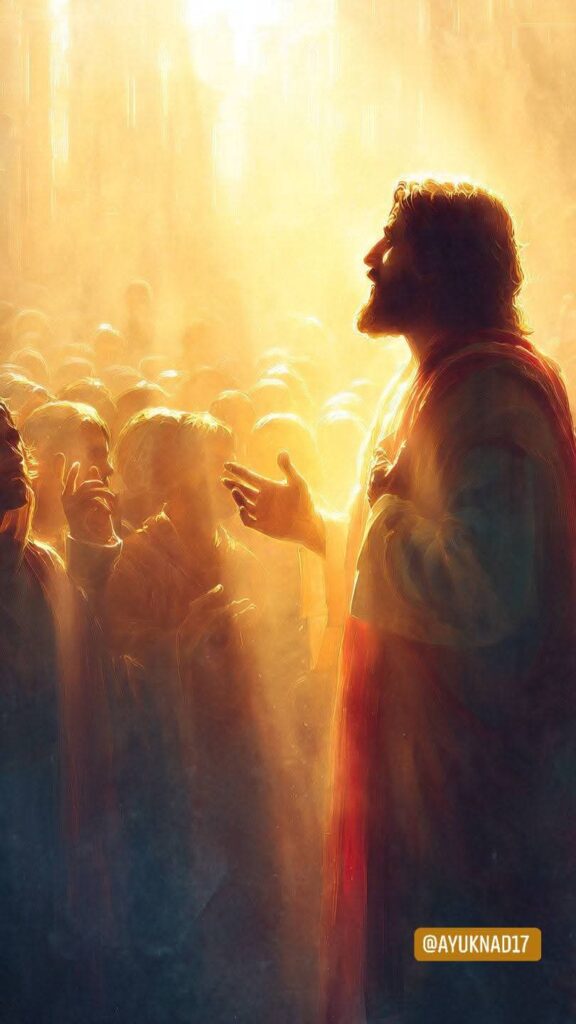
“Birthday of the Church”” (Acts 2:1-11)
My dear sister and brothers in Christ, from the readings we can see the different connections for the occasion today. therefor the Pentecost Sunday, the Gospel of ibid. John 20:19-23 reveals the “Johannine Pentecost,” where the Risen Christ breaks through the disciples’ locked doors of fear to bestow his transformative peace, commission them globally, and breathe the Holy Spirit into the Church. This intimate action mimics the original creation of humanity, equipping the Church with its highest missionary purpose, to act as an agent of divine mercy and administer the sacrament of reconciliation to a broken world. Please! Allow me to share with you the Authoritative Scripture Commentaries that inspired me to understand deeply this celebration today and if you are interested to understand more about the celebration you can see and read also.
First is the Ignatius Catholic Study Bible, New Testament (Page 297), Notes that “to drink of one Spirit” in verse 13 refers primarily to the interior strengthening of Baptism and Confirmation, while historically pointing toward the consumption of the Chalice in the Holy Eucharist.
Second is the New Jerome Biblical Commentary (Page 812), Outlines that Paul’s emphasis on diakonia (ministry) and energemata (activities) is strategically deployed to level any structural hierarchies. It highlights that Paul frames gifts as purely functional, ensuring that no individual can claim exclusive, superior ownership over the Holy Spirit.
Third is the Catechism of the Catholic Church (CCC) Paragraph 731–732 (Page 193), Outlines Pentecost as the definitive manifestation of the Holy Spirit and the full revelation of the Holy Trinity. Paragraph 1076 (Page 279), Defines Pentecost as the arrival of the “dispensation of the mystery,” where the Church is openly displayed to the world through the Holy Spirit.
Fourth is the Vatican II, Lumen Gentium (Dogmatic Constitution on the Church) Chapter I, Paragraph 4 (Page 3), Discusses how the Spirit equips the Church with varied hierarchical and charismatic gifts, directing her in love and introducing her to unity. Chapter II, Paragraph 13 (Page 9), Directly links Acts 2 to the catholicity (universality) of the Church, noting that the citizens of God’s Kingdom are gathered from all nations. Ad Gentes (Decree on the Mission Activity of the Church) Chapter I, Paragraph 4 (Pages 2-3), Highlights that the public mission of the Church began on Pentecost, where the preaching of the Gospel first foreshadowed the union of all peoples in a universal faith.
Fifth is the Unity of the Trinity (Listening to the Tradition of Israel in the Church) by:Pierre Lenhardt NDS. Fr. Pierre, in his book, explains the concepts of the Bat Kol speaking out, and he links that to the heavenly voice, speaking in the Gospels, particularly the Baptism, that the Church understood as the Holy Spirit. So, Israel and the Church each have their particularity in God’s plan, for both are defined by the proclamation of the unity and absolute uniqueness of God.
So, for everyone, I would like to invite you not to forget this gospel story from ibid. John 20:19-23; On that first Easter evening, the disciples hid behind locked doors, paralyzed by fear. Jesus broke through their barriers, stood in their midst, and breathed His peace and the Holy Spirit upon them. Pentecost reminds us that the Holy Spirit replaces our deepest fears with divine peace and sends us forth to extend God’s radical forgiveness to a broken world. So, let us our self and try to reflect What “locked doors” of fear, doubt, or resentment that (I) are you holding onto today, and how can you open them to let the Holy Spirit’s peace and forgiving power transform (me) you?
For Reflection and Discussion: 1. The disciples hid because of fear. What are the modern “locked rooms” (like anxiety, shame, or comfort zones) that keep believers from living out their faith boldly today? Jesus offers peace before He gives them a mission. Why is experiencing Christ’s internal peace necessary before we can successfully do His work in the world?
2. Jesus ties the Holy Spirit directly to the ministry of forgiveness. Why do you think forgiving others is often the hardest mission He gives us, and how does the Spirit help? Jesus breathed on them, echoing how God breathed life into Adam in Genesis. How does the Holy Spirit feel like a “fresh breath of life” in your personal faith journey right now?
Bibliography: Donald Senior, ET Al; The Catholic Study Bible 3rd Edition 2010; The New American Bible, Saint Joseph Edition 2011;The Catholic Prayer Bible 1993; Brown R.E; An Introduction to the New Testament 1997;Liddell & Scott’s: Greek-English Lexicon 1889;McKenzie, J.L. Dictionary of the Bible (NewYork:1965);Hubertus R. Drobner “THE FATHERS OF THE CHURCH”;Vincent Bosco “The Christological Foundations of the Doctrine of Sacred Icons According to John of Damascus” Copyright 2025; Pierre Lenhardt NDS; The Unity of the Trinity (Listening to the Tradition of Israel in the Church); www.vatican.va/archive/ENG0839/_PZH.HTM; www.vatican.va/content/catechism/en/; https://youtu.be/y0UFNVpkWGU ; www.newadvent.org/
This week’s Sunday Liturgy Commentary was prepared by
Dunhill Malunar Timkang, Holy Land – Jerusalem, Bat Kol Secretary
[Copyright © 2026]
Comments are closed