


Solemnity of Mary, the Holy Mother of God Octave of Christmas
01st January 2026
Lectionary Readings: Numbers 6:22-27 ; Psalm 67:2-3, 5, 6, 8 ; Galatians 4:4-7 ; Luke 2:16-21
Theme: Divine Motherhood of Mary (Theotokos)
: central role in the mystery of the Incarnation (Luke 2:16-21)
The Solemnity of Mary, the Holy Mother of God, is the oldest Marian feast day in the Roman Rite, celebrated annually on January 1st. It is a day that reminds us of the profound love, hope, and faith that Mary embodies as the “Theotokos” (God-bearer). Falling on the Octave of Christmas, eight days after the birth of Jesus, this feast invites us to begin each new year inspired by Mary’s unwavering trust in God’s plan. The 1969 revision of the Roman Rite liturgical calendar affirms: “1st January, the Octave Day of the Nativity of the Lord, is the Solemnity of Mary, the Holy Mother of God, and also the commemoration of the conferral of the Most Holy Name of Jesus.” However, on January 1st, we honour Mary, whose “yes” to God changed the course of history. “We never give more honour to Jesus than when we honour His Mother, and we honour her simply and solely to honour Him all the more perfectly.” From the earliest Christian traditions (3rd–4th Century), Mary’s title as “Mother of God” appearing in ancient prayers like the Sub tuum praesidium (3rd-century Egypt) has inspired believers to see in her a model of courage and grace. Early Rome marked January 1st as the anniversary (Natale) of the Mother of God, but a pivotal moment came at the Council of Ephesus in 431 AD (The title Theotokos was dogmatically defined to combat the Nestorian heresy). Here, the Church affirmed that because Jesus is fully God and fully man, Mary is truly the Mother of God a truth that continues to uplift and encourage us to embrace our own callings with faith and humility, just as she did.
The development and history show the Replacement by the Feast of the Circumcision (13th Century). In the Middle Ages, the Marian emphasis on January 1st was largely overshadowed by the Feast of the Circumcision of Christ, commemorating the day Jesus was named and circumcised according to Jewish law. After the Second Vatican Council, Pope Paul VI’s 1969 to 1974 liturgical reform restored the ancient practice of dedicating January 1st to Mary’s motherhood. In his 1974 apostolic letter Marialis Cultus, he officially established the Solemnity of Mary, Mother of God, as a universal feast.
Today is a Holy Day of Obligation in the Catholic Church, reminding us not only to attend Mass, but also to reflect on the deeper meaning of this celebration. While the obligation may be waived by local bishops if it falls on a Saturday or Monday, the day remains significant for spiritual growth. Since 1968, the Church has also observed World Day of Peace on January 1st, honoring Mary as the “Queen of Peace.” This is an opportunity for us to commit to fostering peace in our own lives, families, and communities, following Mary’s example of compassion and trust. Liturgically, this day concludes the Octave of Christmas and features special readings, including the Priestly Blessing (Aaronic Blessing) from the Book of Cf. Numbers 6:22-27 (CSB p182). This blessing reminds us of God’s enduring desire to be present with and bless His people. The Church teaches that this desire finds its ultimate fulfillment in the Incarnation when God the Son took on human flesh through Mary. We are encouraged to recognize God’s presence in our daily lives and, inspired by Mary’s faith, to become instruments of His blessing and peace to those around us.
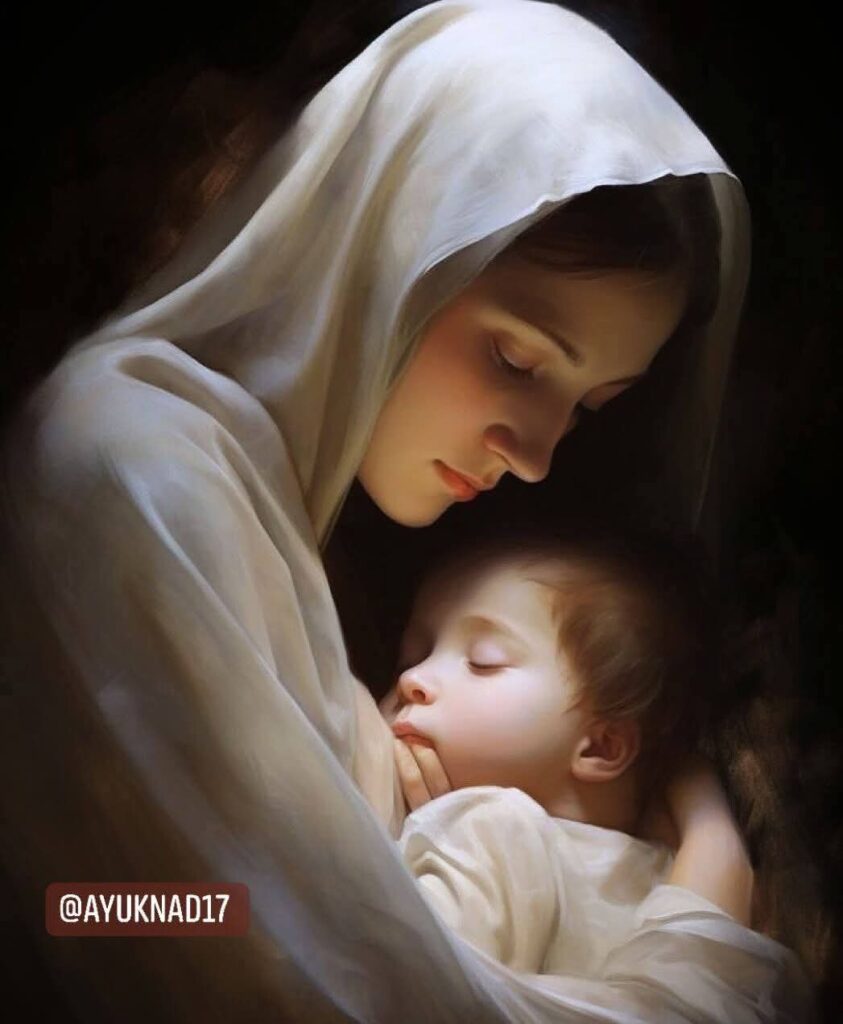
In the Catholic liturgy, Cf. Psalm 67 (verses 2–3, 5, 6, 8 CSB p774) serves as the Responsorial Psalm for the Solemnity of Mary, Mother of God. Its connection to the feast day is rooted Echoing the Priestly Blessing. The psalm begins with an adaptation of the Aaronic blessing from the First Reading (Ibid. Numbers 6:22–27), asking that God “let his face shine upon us”. Liturgically, this connects to Mary, who was the first to see the human face of God in her newborn son. Universal Salvation The psalm prays for God’s way to be known “among all nations”. This highlights the universal scope of the Incarnation that Mary’s “yes” brought a Savior not just for Israel, but for all humanity. We can see the New Year Prayer for Peace, As a communal prayer for divine favor, the psalm’s request for God to “rule the peoples in equity” and “guide the nations” aligns with the observance of the World Day of Peace on January 1st. The connection of the Feast today to the Catholic liturgy, CF. Galatians 4:4-7 (CSB p1650), is the Second Reading for the Solemnity of Mary, Mother of God. Its connection to the feast is centered on the theology of the Incarnation and our subsequent adoption as children of God. We can see the Affirmation of the Motherhood of God from the verse stating that God sent His Son, “born of a woman,” which is the only time St. Paul mentions Jesus’ mother. This phrase provides a biblical foundation for the title Theotokos (God-bearer), affirming that Jesus was truly human and truly divine, born of a human mother. The Spirit of the Son: The passage concludes with the promise that God has sent the “Spirit of his Son into our hearts, crying out, ‘Abba, Father!'”. On the first day of the New Year, this serves as a reminder of the believer’s new identity and intimate relationship with God, made possible by the “yes” of Mary.
It is interesting how Luke presented the character of Mary when he wrote, “When they saw this, they made known what had been told them about this child; and all who heard it were amazed at what the shepherds told them. Mary treasured all these words and pondered them in her heart…” Mary’s cause of amazement was that after carrying the Word Incarnate in her womb for 9 months, alas, she completed the cycle of motherhood by giving birth to a human and divine son. Ibid. Luke 2:16-21 (CSB p1439) is the Gospel reading for the Solemnity of Mary, Mother of God. Its connection to the feast is rooted in The Mother of God (Theotokos). The reading portrays Mary in her primary relationship to Jesus, as the one who gave birth to the Savior. By focusing on her with the infant in the manger, the Gospel underscores the doctrine of the Theotokos (God-bearer), affirming that the child she bore is truly the Son of God. We can also see that Mary, as the Contemplative Disciple A central verse in this passage is Ibid. Luke 2:19: “And Mary kept all these things, reflecting on them in her heart”. The Model of Faith, Mary, is presented not just as a mother but as the first disciple who ponders the mysteries of God’s plan. We can see a Guide for the New Year. On January 1st, the Church encourages the faithful to imitate Mary’s contemplative stance, treasuring and reflecting on God’s presence as they begin a new year. Thus, slowly, the immense love of God is unfolding in the lives of many. The salvific action of God is taking place, and upon hearing the news from the shepherds, Mary realized in great amazement that salvation is not limited only to the tribes of Israel but to all humankind. These events caused her to ponder what would be the next course of events for his son. Mary would be much more amazed and would continue to ponder how immense God’s love is for us. And all these events were happening not somewhere else but in her womb, and her being, to the shepherds and the travelers. Truly, the blessing of Moses, which originated from the Divine, occurred and unfolded before their very eyes as it was loudly expressed in the Tehillim verses: “Shout joyfully to God, all the earth; sing of his glorious name; give him glorious praise. Say to God: ‘How awesome your deeds!” Now her joy is the joy of many her treasure during the Annunciation is revealed not only to her but to heavenly and earthly beings alike. To the shepherds, the message for us is that the joy of salvation must be guarded and nurtured. To the traveling wise men, the message for us is that we must be wise in following the signs of the ages and distinguishing the way that leads to Christ. We too need to proclaim Christ among those whom we are going to meet along our life’s journey and be reminded that faith and hope in Christ is a lifelong journey. From the Virgin Mary and Joseph, we learn to be prudent, humble, and obedient to the call of the divine. Let’s not forget that the Octave of Christmas and the Naming of Jesus in the passage concludes with Ibid. Luke 2:21, which notes that after eight days, the child was circumcised and given the name Jesus. The Octave Day on January 1st is exactly eight days after Christmas. Historically, this day was celebrated as the Feast of the Circumcision before it was restored as a Marian solemnity. Therefore, the “Holy Name,” the act of naming the child, marks his entrance into the covenant, a moment where Mary’s motherhood is publicly recognized according to Jewish law.
The Catechism of the Catholic Church (CCC) provides the theological framework for the Solemnity of Mary, the Holy Mother of God, primarily by explaining the title “Theotokos” (God-bearer) and its essential link to the identity of Jesus Christ. The Definition of Divine Motherhood (CCC 495) The Catechism affirms that while Mary is called the “mother of Jesus” in the Gospels, she is truly the Mother of God because the one she conceived by the Holy Spirit was none other than the Father’s eternal Son, the second person of the Holy Trinity. Mary as Mother of the Church (CCC 963, 975) The Catechism connects Mary’s role as the Mother of God to her role as the spiritual mother of all believers. Because she is the mother of the Savior, she is also the mother of the “members of Christ” the Church. The Solemnity in the Liturgy (CCC 971) The Catechism notes that liturgical feasts dedicated to the Mother of God, such as the January 1st solemnity, are intrinsic to Christian worship and are distinct from the “adoration” given to God alone. In short, the Catechism explains that calling Mary the “Mother of God” is the highest honor the Church can give her, not because she is the source of God’s divinity, but because she gave birth to a Person who is truly God. Lastly, the message came through the angels it is of divine origin. One must pay attention to the origin of the promises and of the news that one is receiving and hearing. The source must be of divine inspiration in the light of faith in Christ the Incarnate Word.
For Reflection and Discussion: 1. How can I distinguish the way that leads to Christ? Whom will I trust? As the year begins, will my life be defined by my own productivity and fears, or by the trust and patience modeled by Mary? 2. How can I recognize the joy that is coming from Christ? How will I be a “God-bearer”? In what practical ways can I “disarm” my words and actions to bring Christ’s peace to my family, community, and the world?
Bibliography: Donald Senior, ET Al; The Catholic Study Bible 3rd Edition 2010; The New American Bible, Saint Joseph Edition 2011;The Catholic Prayer Bible 1993; Brown R.E; An Introduction to the New Testament 1997 Gospel of Luke p225-278;Liddell & Scott’s: Greek-English Lexicon 1889;McKenzie, J.L. Dictionary of the Bible (NewYork:1965);Hubertus R. Drobner “THE FATHERS OF THE CHURCH”;https://vatican2voice.org/;Adam, Adolf. The liturgical year: Its history and meaning after the reform of the liturgy. (New York, 1981).;Cathechism of the Catholic Church, United States of America copyright 1994, United States Catholic Conference, Inc. Libreria Editrice Vaticana;
This week’s Sunday Liturgy Commentary was prepared by
Dunhill Malunar Timkang, Jerusalem – Israel, Bat Kol Secretary
[Copyright © 2026]
Comments are closed