


The Epiphany of the Lord
04th January 2026
Lectionary Readings: Isaiah 60:1-6; Psalm 72:1-2, 7-8, 10-11, 12-13.;
Ephesians 3:2-3a, 5-6; Matthew 2:1-12
The liturgical feast of the Epiphany from Greek word Ἐπιφάνεια / Epipháneia means “manifestation” or “appearance,” from the verb φαίνω / phaínō, “to manifest, appear, be evident.”
In Christianity as a whole, this feast takes on various dimensions, such as the birth of Jesus, his manifestation to the world, the baptism of Jesus, the beginning of his ministry…
In a general sense the Feast of the Epiphany highlights the diversity of the world’s cultures and peoples, all of whom are called to bear witness to the universal nature of the Salvation brought by Christ, whose birth we celebrate.
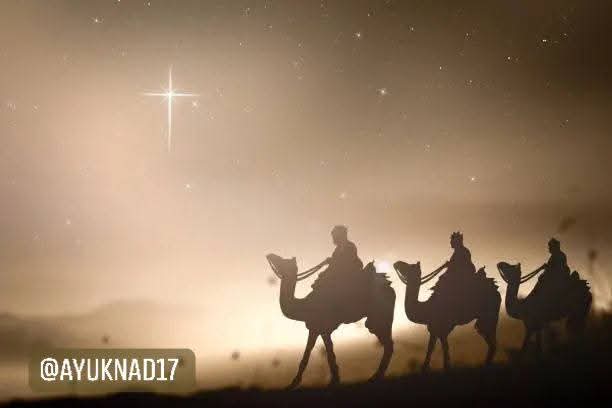
The Catholic liturgy anticipates the celebration of January 6th to this Sunday, the 4th, as the feast of the manifestation of God to humanity in the person of Jesus. At first glance, the story of the Magi from the East, based on today’s reading from the Gospel of Matthew, could be understood as the manifestation of God to the Nations. The Three Wise Men, representing the Nations who came from the East to worship the God who became incarnate among the people of Israel and revealed himself to the world.
In the early centuries, Christian tradition did not recognize a specific day for the birth of Jesus. Several different dates appear, but there is no single tradition, and gradually, in conflict between pagans who embraced faith in Jesus and pagans who did not follow Jesus, a date was adopted to differentiate between the gods celebrated among non-Christian pagans. We have an example: “January 6th is a date chosen by the Church Father Epiphanius of Salamis (310-403), in his Panarion, as the date of Jesus’ birth, in order to refute a competing date proposed by the Gnostics of the Alogo”, in: Gary Forsythe, Time in Roman Religion: One Thousand Years of Religious History, Routledge, 2012, pp. 119-120. Or other information when read carefully of John Chrysostom’s Christmas sermon (from 388) proves that December 25th had been celebrated in Antioch for some years: “It has not been ten years, in fact, since this day has been manifest and known to us; I know well that, even now, many are still discussing it among themselves; some attack it, others defend it”, (cf Noël in: Dictionnaire de Spiritualité, Beauchesne, 1981). This means that a time surrounding the birth/manifestation of Jesus was celebrated, but not necessarily a specific day.
But regardless of the dates and meanings that have been fixed over time throughout the history of the Church, what should interest us first is the meaning that the Gospel from within Judaism intended to convey when recounting the birth of Jesus as God incarnate and as the Messiah awaited by the Jewish people.
The first reading (Isaiah 60:1-6) and Psalm 71 (72) form the prophetic basis that nourishes the messianic hope of the Jewish people with universal consequences of God’s intervention in the history of humanity
– “Nations will walk toward your light, and kings toward the brightness of your dawn. Lift up your eyes all around, and look all, they are gathering, they are coming to you… The treasures from beyond the seas will flow to you… to you will come the riches of the nations… they will announce the exploits of the Lord” (Is 60).
– “In those days justice will flourish, and peace will abound until the moon is no more!… The kings of Tarshish and of the Isles will bring gifts… All kings will bow down before him, all nations will serve him” (Ps 71).
In light of the experience of Jesus’ resurrection, followed by the testimony given by Jesus’ followers, the Good News penetrated the Gentiles, and the God who revealed himself to Israel became a new and concrete reality among the nations. The prophecy and hope lived by the Jewish people are realized in history, in the eyes of the Jewish followers of Jesus: Peoples are converted to the God of Israel through Jesus Christ, God incarnate, Emmanuel. Therefore, the feast of the Epiphany, with the visit of the Magi, representing the nations (where is the newborn King of the Jews?), is the concrete and theological expression of the fulfillment of Israel’s vocation, which God “established as a light to the nations” (Isaiah 49:6).
This week’s Sunday Liturgy Commentary was prepared by
Elio Passeto, NDS, Jerusalem–Israel, Director
[Copyright © 2026]
Comments are closed