


Sunday of Divine Mercy (Second Sunday of Easter)
12th April 2026
Lectionary Readings: Acts 2:42-47; Ps. 118:2-4, 13-15, 22-24; 1 Pet. 1:3-9; Jn 20:19-31
Theme: The Gift of Mercy and Peace “Peace be with you” (Jn 20:19-31)
“Peace be with you” (cf. John 20:19-31 CSB p1523-1524): the Gift of Mercy and Peace.
Today, on Divine Mercy Sunday, a wonderful celebration for Roman Catholics, is a special occasion, taking place on the Second Sunday of Easter, right at the end of the Easter Octave. This special feast was officially set by Pope Saint John Paul II on April 30, 2000, during the canonization of Saint Maria Faustina Kowalska. The origins of this feast come from the heartfelt experiences of Saint Faustina, a humble Polish nun, in the 1930s. Through her diary, “Divine Mercy in My Soul”, she shares how Jesus appeared to her with rays of red and pale light shining from His heart. He asked that the Sunday right after Easter be dedicated as the “Feast of Mercy,” inviting everyone to come and experience His love.
Jesus expressed His wish for this feast on 14 different occasions, describing it as a “refuge and shelter for all souls, especially poor sinners.” The teachings from the Church Fathers show us that the events in ibid. John 20:19–31 reveal the beautiful reality of Christ’s resurrection, the incredible nature of His glorified body, and the Church’s special authority to forgive sins. In ibid. John 20:22, when Jesus breathed on the disciples and gave them the Holy Spirit, it was a unique moment, setting the stage for what was to come at Pentecost. Saint Cyril of Alexandria pointed out that this initial gift of the Spirit helped prepare the disciples to fully receive the Spirit during Pentecost. Similarly, Pope Saint Gregory the Great saw these two moments of receiving the Spirit as a reflection of the two commandments of love. The Spirit given on Earth inspired the disciples to love their neighbors, while the Spirit, sent from heaven at Pentecost, filled them with love for God.
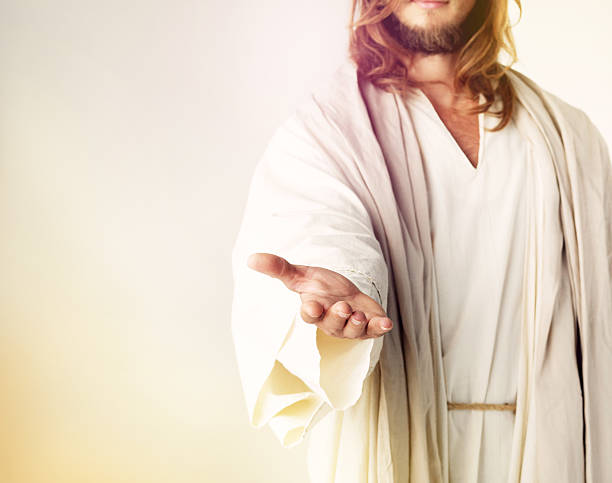
The Gospel of ibid. John chapters 20:19–31 serves as the inspiring foundation for Divine Mercy Sunday. It reveals the Risen Christ’s compassionate encounter with His fearful disciples, illustrating that God’s mercy actively pierces through human fear and doubt. The disciples, hiding behind “locked doors,” are met by Jesus, who takes the initiative to enter their closed space. His first words, “Peace be with you,” are a profound gift of reconciliation. He does not chastise them for their abandonment; instead, He offers pure mercy. By revealing His wounds, Jesus affirms His identity and connects His suffering to the joy of the Resurrection. He then breathes the Holy Spirit upon them, commissioning them to be agents of that same mercy through the power of forgiveness.
The story of “Doubting Thomas” exemplifies the depth of mercy: Jesus returns to address one individual’s doubt, leading to the ultimate confession of faith: “My Lord and my God!“
In ibid. John 20:19–31, we witness “Mercy through Faith and Forgiveness.” The locked room symbolizes human fear and self-imposed isolation, while Jesus’ greeting of peace restores the broken relationship between Christ and His followers. We also reflect on the Holy Spirit and forgiveness, marking the institution of the power to forgive sins, as the disciples become “witnesses of mercy.” Ultimately, Jesus’ wounds serve as signs of His victory over death and His profound identification with our suffering. So, on Divine Mercy Sunday, we are reminded of God’s deep love and mercy for all of us, and we are invited to share that love with others!
For Reflection and Discussion:
- Where are your “locked doors”? In what areas of your life are you currently paralyzed by fear or uncertainty? Can you accept peace without fixing things first?
2. How does it feel to know Jesus enters your “locked” spaces before you are ready? Are you a Thomas? What specific “proof” do you find yourself asking for in your spiritual journey? How can you be a channel of mercy? Having received God’s peace, who in your life needs your forgiveness or a “greeting of peace” today?
Bibliography: Donald Senior, ET Al; The Catholic Study Bible 3rd Edition 2010; The New American Bible, Saint Joseph Edition 2011;The Catholic Prayer Bible 1993; Brown R.E; An Introduction to the New Testament 1997 p368;Liddell & Scott’s: Greek-English Lexicon 1889;McKenzie, J.L. Dictionary of the Bible (NewYork:1965); Hubertus R. Drobner “THE FATHERS OF THE CHURCH” Cyril of Alexandria; Augustine of Hippo;Diary of St. Maria Faustina Kowalska: Divine Mercy in My Soul (eBook version);www.archive.org/stream/St.FaustinaKowalskaDiary/divine-mercy-in-my soul_djvu.txt;www.en.wikipedia.org/wiki/Faustina_Kowalska; www.vatican.va/content/pius-xii/en/encyclicals/documents/hf\_p-xii\_enc\_29061943\_mystici-corporis-christi.html
This week’s Sunday Liturgy Commentary was prepared by
Dunhill Malunar Timkang, Jerusalem – Holy Land, Bat Kol Secretary
[Copyright © 2026]
Comments are closed