


Solemnity of All Saints
01st November 2026
Lectionary Readings: Rev.7:2-4, 9-14; Psalm 24: 1-6; 1 Jn 3:1-3; Mt.5:1-12
Theme: We are called to be saints!
Today in celebrating the feast of All Saints, we remember and exalt the men, women and children whom we call holy. A long-standing tradition in Judaism was to honor the prophets and the holy people who had died. This tradition was greatly valued and adopted by the first Christians. This veneration began with the martyrs who had given their lives for their faith and Christians prayed to God through their intercession. We can all list many such saints and most of us have a patron saint, one after whom we are named. What made these ordinary people so extraordinary? They came from all walks of life, from different countries and at various times throughout the 2000 years of Christianity. How do we define a holy person, a saint?
God’s call to the Israelites is the foundation, “I am the Lord your God; consecrate yourselves and be holy, because I am holy.” (Lev.7:44) This call is central also to Jesus’ message. Many would define sainthood as persons who dedicated their lives to God, who followed God’s teaching or those who lived a virtuous life and modelled their lives on Jesus. Perhaps though, to put it simply, a saint is one who realized that all they have received is pure gift. Nothing is owed to a human being; God has given us everything!
St. Paul in his letter to the Romans refers to the faithful as “loved by God and called to be saints.” (Rom.1:7). No matter how we feel about ourselves, nor of what our past consists , no matter what we have done and are ashamed of or have regretted, God still calls us to become saints. We are the children of God and blessed by God. No burden is too heavy, no mistake too great, and no situation too hopeless for God’s mercy.
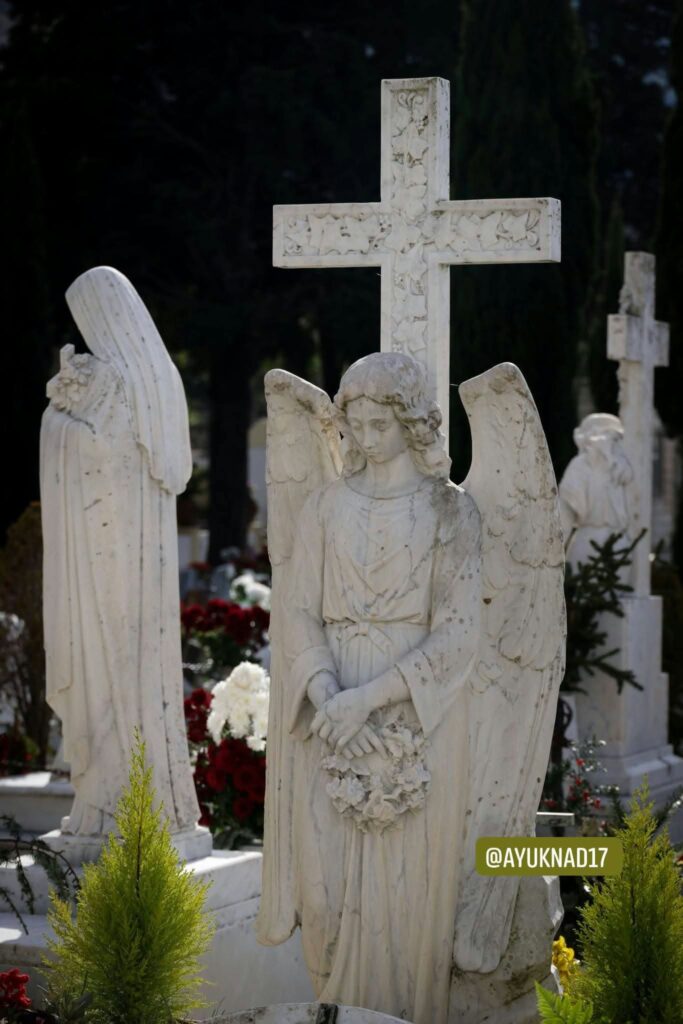
The saints canonized by the Church are true examples for us to imitate. Robert Ellsberg speaks of this in a beautiful manner: “The saints are those who, in some partial way, embody – literally incarnate – the challenge of faith in their time and place. In doing so, they open a path that others might follow.” (Rupp 32). There are however, others who have not been canonized and we would be remiss if we did not recall the “many saints perhaps less remembered.” These are the people we knew, our parents, relatives, those who taught us, friends, our neighbors even of other faiths. All these who encouraged us, who walked with us through good times and bad. We owe them a debt of gratitude for they were God’s agents in our lives.
An article of our faith is that we believe in the Communion of Saints. “We believe in the communion of all the faithful of Christ, those who are pilgrims on earth, the dead who are being purified, and the blessed in heaven, all together forming one Church; and we believe that in this communion, the merciful love of God and his saints is always attentive to our prayers” (Paul VI, CPG § 30) (para.5, #962). This doctrine invites us to pray for the dead and we intend by our prayer to stay in touch with them and thus maintain our relationship of love. We therefore, have the opportunity to finish ‘unfinished business,’ to apologize, to forgive and to ask for forgiveness. G.K. Chesterton stated: “Christianity is special because in its belief in the communion of saints…… They still get to hear what we’re saying to them.” (Rolheiser)
As we see in today’s Gospel, Jesus gives us the blueprint of how to live a good and holy life by giving us the Beatitudes, the very heart of his message. These are an invitation to a radical heart transformation marking a pathway to holiness. Jesus calls and we realize that we are chosen, loved and sent to serve, thus having a vital role in God’s plan.
For Reflection and Discussion:
1. Am I convinced that sainthood is a possibility for me?
2. Let us reflect on the striking words of the French Philosopher, Leon Bloy, “There is only one true sadness, the sadness of not being a saint.”
Bibliography: Rolheiser R., An article, In Exile, “Deepening Our Relationship with Those We’ve Lost,” Nov. 4, 2025.; Rupp J., Out of the Ordinary, Ave Maria Press Inc., Notre Dame, IN 2000.;The Holy See, Catechism of the Catholic Church, 2nd edition, paragraph 5, #962 of “Communion of Saints.”
This week’s Sunday Liturgy Commentary was prepared by
Rita Kammernmayer, Jerusalem – Israel, Bat Kol Alumna 2001
[Copyright © 2026]
Comments are closed