


Parashat Vayishlach
5th December 2025
Week of 30th November – 06th December 2025
Torah portion : Genesis 32 :4-36 :43 ; Haftarah : Obadiah 1 :1-21
This week’s Parashah continues the story of Jacob, marked by constant difficulties, conflicts, suffering, and reconciliation. In fact, the book of Genesis describes the story from the beginning to the period of the patriarchs and matriarchs as a complex relationship between family members. It possibly teaches us that the story told is a theologizing of a remote past, preserved in the memory of tradition or various traditions of tribal or clan relations, and that from a biblical perspective it takes on a religious meaning and becomes part of God’s plan.
We see the initial conflict with Adam and Eve, with Cain and Abel, with Abraham, Sarah and Hagar, Isaac and Ishmael, Jacob and Esau, the sons of Jacob and Joseph…. All this complexity of encounters and disagreements between people reflects the history of humanity with all that it represents, both the good and the less good aspects of human behavior.
Today’s Parashah (Vayishalach Gen. 32:4-36:4) is very rich in teachings, and Jewish tradition has composed extensive commentaries on it. It is not within this timeframe that we can fully explore the wealth of teachings it contains.
Firstly, we have the impressive encounter of Jacob with his brother Esau, separated after two decades. The encounter is marked by forgiveness and reconciliation between them in a surprising way. On his way back to the Land of Israel and to meet his brother Esau, Jacob fights with a ‘man’ who changes his name to Israel.
Then we have Dinah, Jacob’s daughter, who is kidnapped by Shechem, a powerful man in the region. Simeon and Levi, Jacob’s sons, will avenge this act and recover their sister.
Subsequently, Jacob settles in Beth-el, and Rachel dies giving birth to Benjamin; she is buried in Ephrath, also called Beth-lehem.
Finally, Isaac dies, and his two sons, Esau and Jacob, now reconciled, bury their father in Hebron alongside his parents. In conclusion, Esau settles in the mountains of Seir, and the text presents a list of Esau’s sons and lineage. As previously mentioned, it is a parashah rich in existential and faith-based events and teachings.
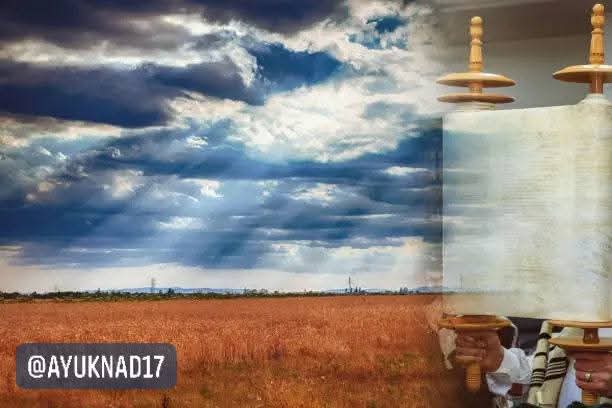
I would like to add a small portion of Jewish reflection on this parashah, just to taste it, using the commentary of one of the greatest commentators of the Jewish tradition, Rashi (1040-105). As is known, Rashi makes a special, detailed commentary on the Bible and the Talmud, rereading and interpreting all of his tradition and updating it, prioritizing the concern to make the text understandable and applicable, emphasizing the Pshat (simple, obvious, literal, concrete sense) as the form closest to the original meaning of the text.
Right from the beginning of the reading we learn its depth and how much it can teach us. The text says that “Jacob sent messengers (Melachim=Angels) beforehand to his brother Esau, in the land of Seir, in the fields of Edom”. Rashi clarifies that these are indeed angels, because the previous verse speaks of the angels who came to meet Jacob, and it is these angels that Jacob sends. And in the sequence (vs. 5) Jacob orders the angels sent to tell his brother that he dwelt (heb. GARTI). Rashi teaches that this means that what Jacob meant to say to Esau: “I did not become a prince nor a notable one, but remained as a foreigner (heb. GER), from the same root as the verb I dwelt (heb. GARTI). You have no reason to hate me because of the blessing your father gave me: “Be the Master of your brothers” (Gen. 27:29), the blessing was not fulfilled in me.” Another explanation, says Rashi: “I count the letters of the word (GARTI=I lived) and I get a total of 613. This means that I lived (GARTI) with Laban the wicked, but I kept the 613 commandments of God, I did not follow his bad examples.”
Dear friends, as we can see, Jewish tradition teaches us that a single Hebrew word or expression from the Scriptures can be an inexhaustible source of learning. This fact alerts us and challenges us to the continuous search for the Word of God and, as the teachings of the Church say, aided by listening to and studying the tradition of Israel.
This week’s Parasha Commentary was prepared by
Elio Passeto, NDS, Jerusalem–Israel, Director
[Copyright © 2025]
Comments are closed