


Parashat Achrei Mot
24th April 2026
Week of 17 -25 April 2026
Torah portion : Lev. 16:1-18:30; Haftarah: Ezekiel 22:1-16 (Amos 9:7–15)
Theme: The Accountability of Sacred Living “Holiness vs. Profanity”
Achrei Mot “After The Death” opens by illuminating the ritual service of Yom Kippur, the Day of Atonement. It conveys the vital prohibitions against offering sacrifices outside of the Mishkan (Tabernacle) and consuming animal blood, culminating in a powerful list of forbidden sexual relations.
Parashat Achrei Mot (cf. ETZ HAYIM Lev. 16:1–18:30) embodies the profound tension between human frailty and Divine proximity. The title, “after the death,” poignantly refers to the tragic loss of Aaron’s sons, Nadav and Avihu, who met their fate after approaching God improperly. In response, the Torah reveals a blueprint for safe, sacred access to the Divine through the rituals of Yom Kippur.
This portion showcases the unique service of the High Priest, highlighting the transformative ritual of the two goats one dedicated to God and the other for Azazel the “scapegoat” that cleanses the community of sin. As I read and reflect on this parasha, I am inspired by the themes of Individual and Collective Responsibility. Holiness extends beyond the priesthood; it encompasses dietary practices (the prohibition of blood) and personal behavior (laws regarding forbidden relationships), laying down the moral foundations of a just society.
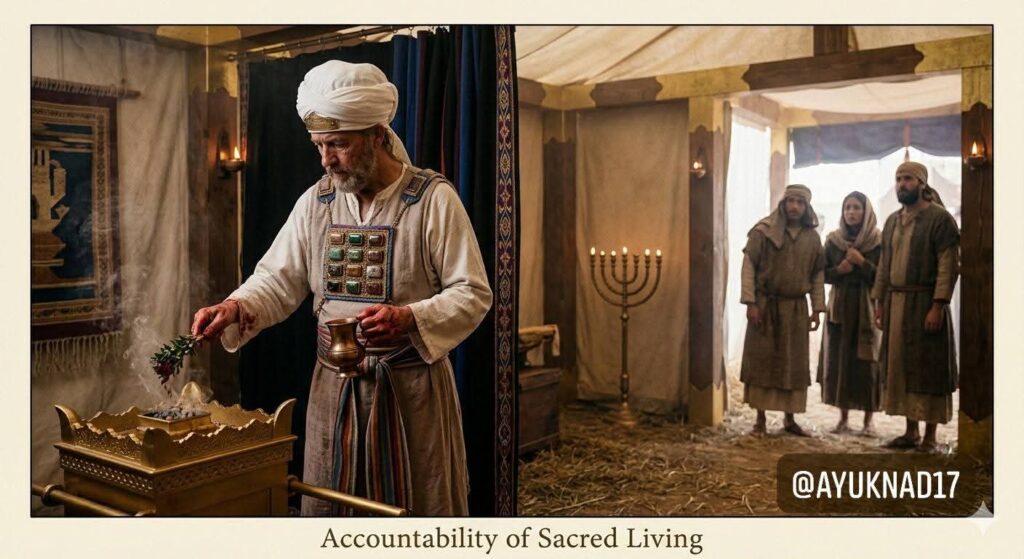
I am moved by the exploration of Distance versus Closeness, demonstrating how to maintain a “healthy proximity” to God through boundaries that protect both the Divine presence and the people. Parashat Achrei Mot (ibid. Leviticus 16:1–18:30) and its accompanying Haftarah (cf. ETZ HAYIM Ezekiel 22:1–16 or 1–19) beautifully highlight the importance of holiness in our personal lives and within our communities, especially as a response to God’s presence.
This parasha begins with the meaningful ritual of Yom Kippur, offering us a way to find purification and atonement after difficult times. It wraps up with important guidelines against sexual immorality and the consumption of blood, reminding us that such “abominations” can lead the land to “vomit out” its inhabitants. Another enlightening portion of the Haftarah from Amos (cf. 9:7–15 www.hebcal.com/sedrot/achrei-mot ) brings us a mix of sobering and hopeful messages. Amos encourages the people to reflect on their sense of entitlement, pointing out that their special relationship with God doesn’t exempt them from judgment. Instead, it calls for a higher standard of moral behavior. If they start acting like other nations, God will treat them the same way, “shaking” them among the nations like grain in a sieve to separate the righteous from the wicked.
What’s key here is that holiness isn’t just a title or status; it’s about how we choose to live every day. While the Parashah outlines rituals and laws that help us lead a holy life, the Haftarah reminds us that these practices mean little without a strong foundation of justice and integrity. True closeness shines through in the way we conduct ourselves morally and ethically.
In contrast, ibid. Ezekiel 22 starkly points out the issues within a society that has lost its way. The prophet lists serious violations like bloodshed, idolatry, exploiting the poor, and disrespecting the Sabbath, ultimately concluding that the people have “forgotten” God. This Haftarah acts as a real-world mirror, showing us what happens when we ignore the boundaries laid out in the Torah.
Both texts remind us that holiness goes beyond rituals (like Yom Kippur); it’s also deeply tied to how we treat others, protect the vulnerable, maintain sexual integrity, and engage in honest business practices. Forgetting God can lead to treating each other poorly. ibid. Ezekiel 22:12 powerfully states, “You have forgotten Me.” This prompts us to reflect on how small, everyday compromises in our ethics can gradually lead us to “forget” our spiritual values. Think of holiness as a kind of “language” that God uses to describe a fulfilling, healthy life. When we choose to follow these guidelines, we’re not just obeying rules; we’re creating a society where God’s presence can thrive and where we all work together to protect the most vulnerable among us.
For Reflection and Discussion:
- In your daily life, what “rituals” or intentional habits do you use to prepare yourself for moments of spiritual connection or meaningful service?
2. The Haftarah highlights the failure of leaders (princes and priests). How can we “stand in the gap” (Ezekiel 22:30) to advocate for justice in our own communities today?
Bibliography: ETZ HAYIM, Torah and Commentary: The Rabbinical Assembly, The United Synagogue of Conservative Judaism, 1999; The Catholic Study Bible 3rd Edition; The New American Bible, Saint Joseph Edition; The Catholic Prayer Bible;)www.sefaria.org.il;)www.chabad.org) /;www.hebcal.com/sedrot/achrei-mot
This week’s Parasha Commentary was prepared by
Dunhill Malunar Timkang, Holy Land – Jerusalem, Bat Kol Secretary
[Copyright © 2026]
Comments are closed